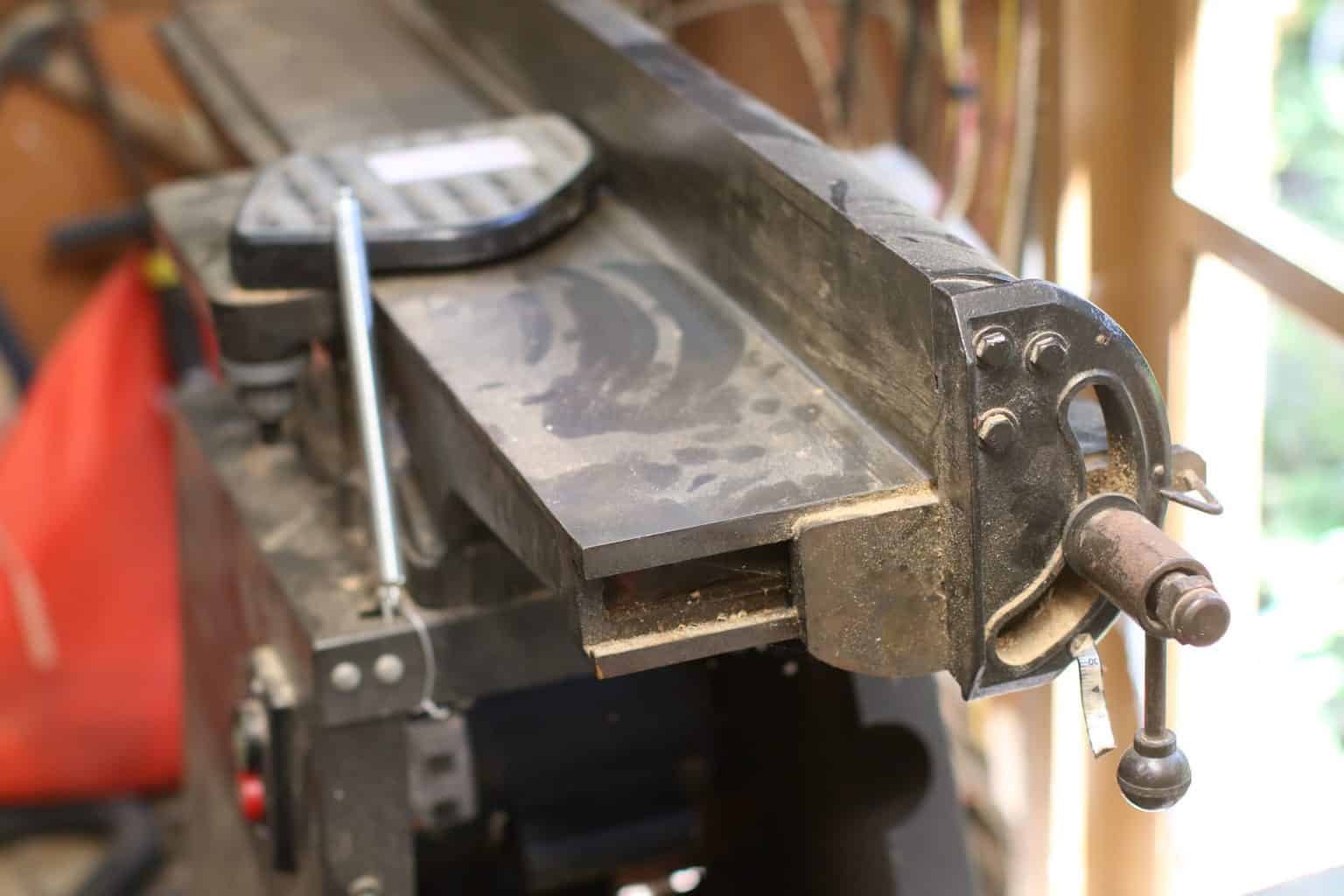
Jointer


A jointer excels in creating a flat face from a warped one and squaring it up, but primarily when the edge is bowed inward. A concave edge is easily taken care of with a jointer, but flattening a convex surface may require a different tool.
Rough lumber is very rarely straight and the edge joints that you may try to create with it straight from the mill may not always make a strong connection. The use of a jointer makes flat, stable, and square surfaces out of raw planks that are ready to be matched together.
The planer is easily confused with the jointer, and uses a similar cutting process, but is intended for adjusting the thickness of wood boards instead of evening out inconsistencies in surfaces. There are combinations of the two called jointer-planers which combine the flattening of a jointer with the thickness adjusting of a planer.
